
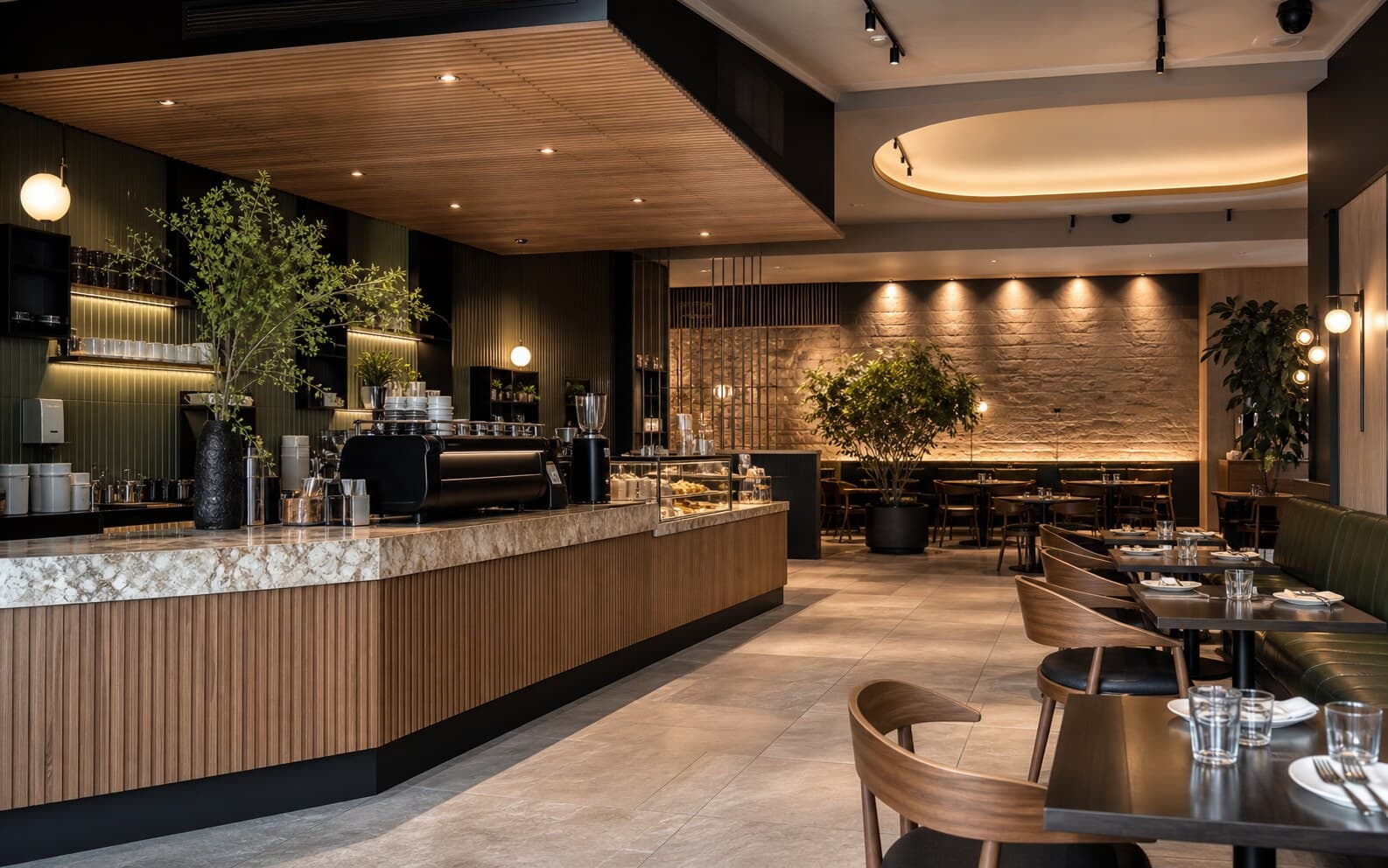
What does a hospitality fitout have to comply with?
A cafe, restaurant, or bar fitout in Sydney has to satisfy several overlapping kinds of compliance: building approval, a commercial kitchen with proper exhaust and ventilation, food-safety surfaces and hand-wash provisions, grease and trade-waste management, fire safety, accessibility, and council and liquor-licensing approvals. None of these are optional extras. Most of them stand between you and the certificates you need to open the doors and start trading.
A different authority or certifier sits behind each one, and they are far easier to handle when you tackle them together from day one instead of chasing them one at a time. We run the relevant approvals and certifications across all these areas so the design, the build, and the paperwork stay lined up right through to handover.
- Building approval for the works and the use you intend for the tenancy
- Commercial kitchen exhaust, ventilation, and mechanical services
- Food-safety surfaces, finishes, and hand-wash and cleaning provisions
- Grease arrestor and trade-waste arrangements with the water authority
- Fire safety measures and the certification that goes with them
- Accessibility, plus council planning, food, and liquor-licensing approvals
Commercial kitchen exhaust and ventilation
A commercial kitchen needs mechanical exhaust and ventilation sized for the cooking you will actually do. The canopies, fans, ductwork, and make-up air all have to pull heat, smoke, steam, and odours out of the space. This is one of the most technical parts of a hospitality fitout, so the right consultant designs it and we install it to suit your real equipment line-up rather than guessing.
Exhaust also has a fire side and a neighbours side. Where the ducting runs, where it discharges, and how you control odour can all affect the building and the people around you, so they often need landlord and authority sign-off. We run the mechanical design, the equipment fit, and the certification together so the kitchen passes inspection and holds up on a busy service.
- Exhaust canopies and fans matched to the cooking equipment
- Make-up air so the kitchen is not starved of air or pulling on the dining room
- Duct routes and discharge that suit the building and the neighbours
- Fire safety attended to where ducting passes through the building
- Sign-off from the relevant certifier once the system is installed and tested
Food-safety surfaces, finishes, and hand-wash
Food-handling areas have to be built so you can clean them and keep them hygienic, and that decides the floors, walls, ceilings, junctions, and joinery right through the kitchen and servery. Where food is prepared, surfaces need to be smooth, durable, and impervious, and the layout has to keep clean and dirty jobs sensibly apart.
Dedicated hand-wash basins, the right sinks, and cleaning provisions are part of the same picture, put where staff can actually reach them mid-service. Food-safety standards set these requirements and the local council checks them, so we get the finishes and provisions right and build the space to pass an environmental-health inspection.
- Cleanable, impervious finishes to floors, walls, and food-contact surfaces
- Coved or sealed junctions where the standard calls for them
- Dedicated hand-wash basins separate from food and equipment sinks
- Sinks and cleaning areas sized for the menu and the equipment
- A layout that keeps food, waste, and cleaning flows from crossing
Grease, trade waste, and drainage
Commercial kitchens throw off grease and food solids that cannot go straight to the sewer, so most hospitality fitouts need a grease arrestor and a trade-waste agreement with the water authority. The arrestor has to be sized for the kitchen, plumbed in correctly, and sitting somewhere it can be serviced and pumped out without shutting you down.
Drainage, floor wastes, and where the wastewater discharges all tie into this, and the arrangements usually need approval before the kitchen can run. We handle the hydraulic design and the trade-waste application with the relevant authority so the kitchen drains properly and stays compliant.
- A grease arrestor sized and located for the kitchen and its servicing
- A trade-waste agreement with the water authority for kitchen discharge
- Floor wastes and drainage suited to a commercial cooking environment
- Access for pump-out and maintenance without closing the venue
- Hydraulic design lined up with the council and water approvals
Fire safety and accessibility
A venue that brings customers together has to meet fire-safety requirements: exits and paths of travel, emergency lighting and exit signage, detection and alarms, and any fire-rated separation or suppression the building calls for. Cooking equipment and kitchen exhaust bring their own fire-safety considerations on top, and the installed measures usually have to be certified before anyone can occupy the space.
Accessibility sits right alongside it. Entries, paths of travel, accessible toilets, and counters generally have to suit customers and staff with disability. Both get assessed as part of the building approval, and we get the fire and access measures certified so the venue can be signed off for occupation.
- Exits and clear paths of travel sized for the number of patrons
- Emergency lighting, exit signage, and detection or alarm systems
- Fire-rated separation or suppression where the building requires it
- Accessible entry, paths of travel, toilets, and service counters
- Certification of the installed fire and access measures before occupation
Council and liquor-licensing approvals
Before a hospitality venue can open, the use of the tenancy generally needs planning approval from the council, and a food business has to be registered or notified so it can be inspected. If the menu, seating, hours, or signage change the approved use of the space, that can trigger its own approval, so settle exactly how you plan to operate before you lock in the fitout.
Serving alcohol adds liquor licensing, and your trading hours, capacity, and conditions can all flow from that licence and the planning approval. These approvals take time and can shape the design, so we run the council, food-registration, and licensing steps alongside the build so the program and the paperwork move together.
- Planning approval from the council for the works and the intended use
- Food-business registration or notification so the venue can be inspected
- Liquor licensing where alcohol is served, with its own conditions
- Trading hours, patron capacity, and signage tied to those approvals
- Getting onto the approvals early so they do not hold up opening day