
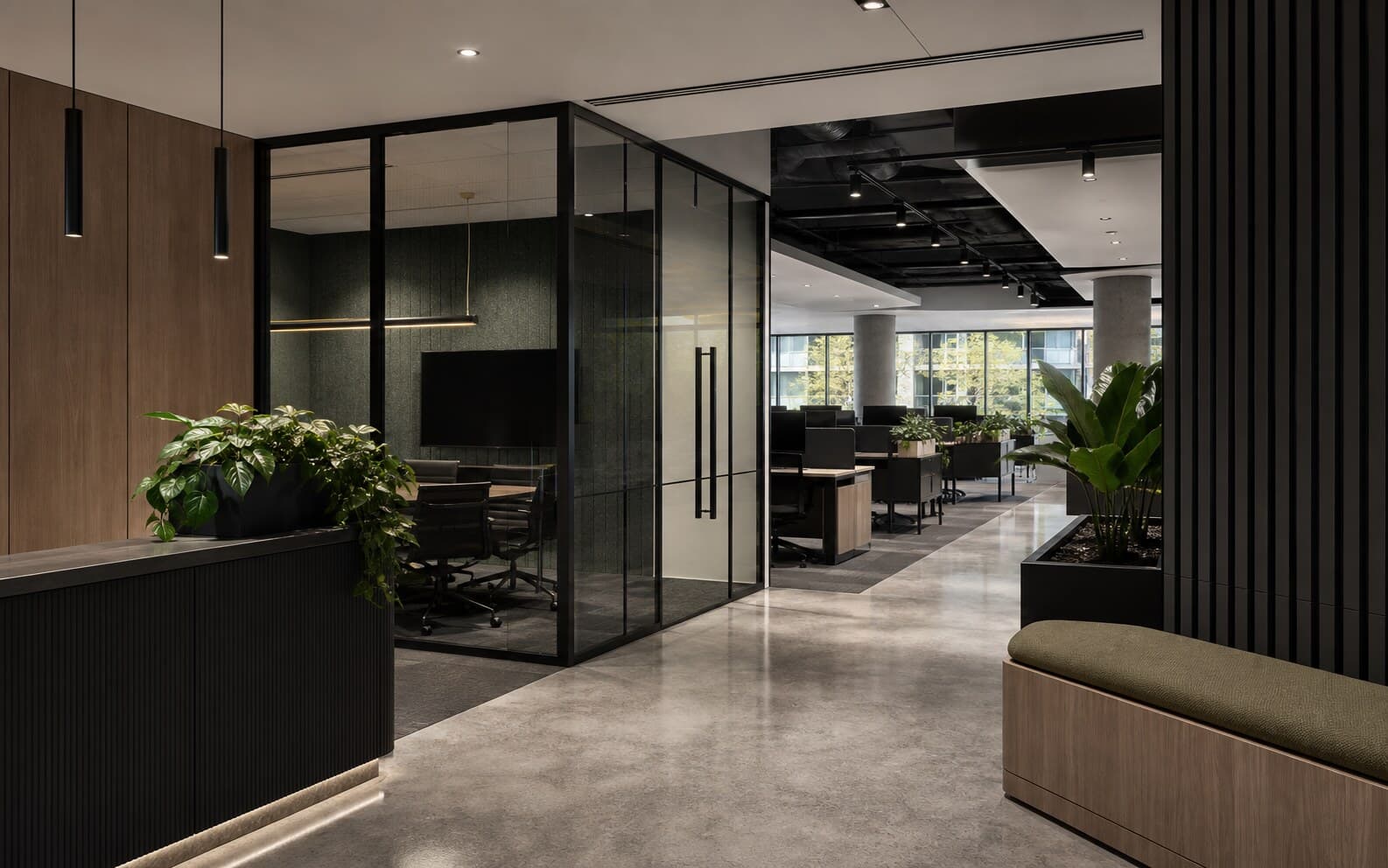
Start with how your team actually works
Before you draw a single desk, get clear on how your team works day to day. Think about who sits with whom, how often people meet, where you need privacy, where clients land when they walk in, what you need to store, the technology you run, and how staff move through the space.
A good layout is about far more than counting desks. It has to support how people arrive, meet, get their heads down, work together, and head home each day. Get that right and the desk numbers fall into place.
Check the services early
Lighting, power, data, air conditioning, access control, and acoustics all shape both your layout and your cost. We sort these out at the start, not once the walls are up.
Looking at them early stops you locking in a design that reads well on a drawing but turns out hard or expensive to build in your tenancy.
Plan around keeping the business running
If your staff need to keep working through the fitout, we talk through staging and access windows before we lock in the program. That way the works fit around your trading, not the other way around.
Agreeing the order of works up front cuts the disruption and gives you a realistic picture of what each week looks like while we are on site.