
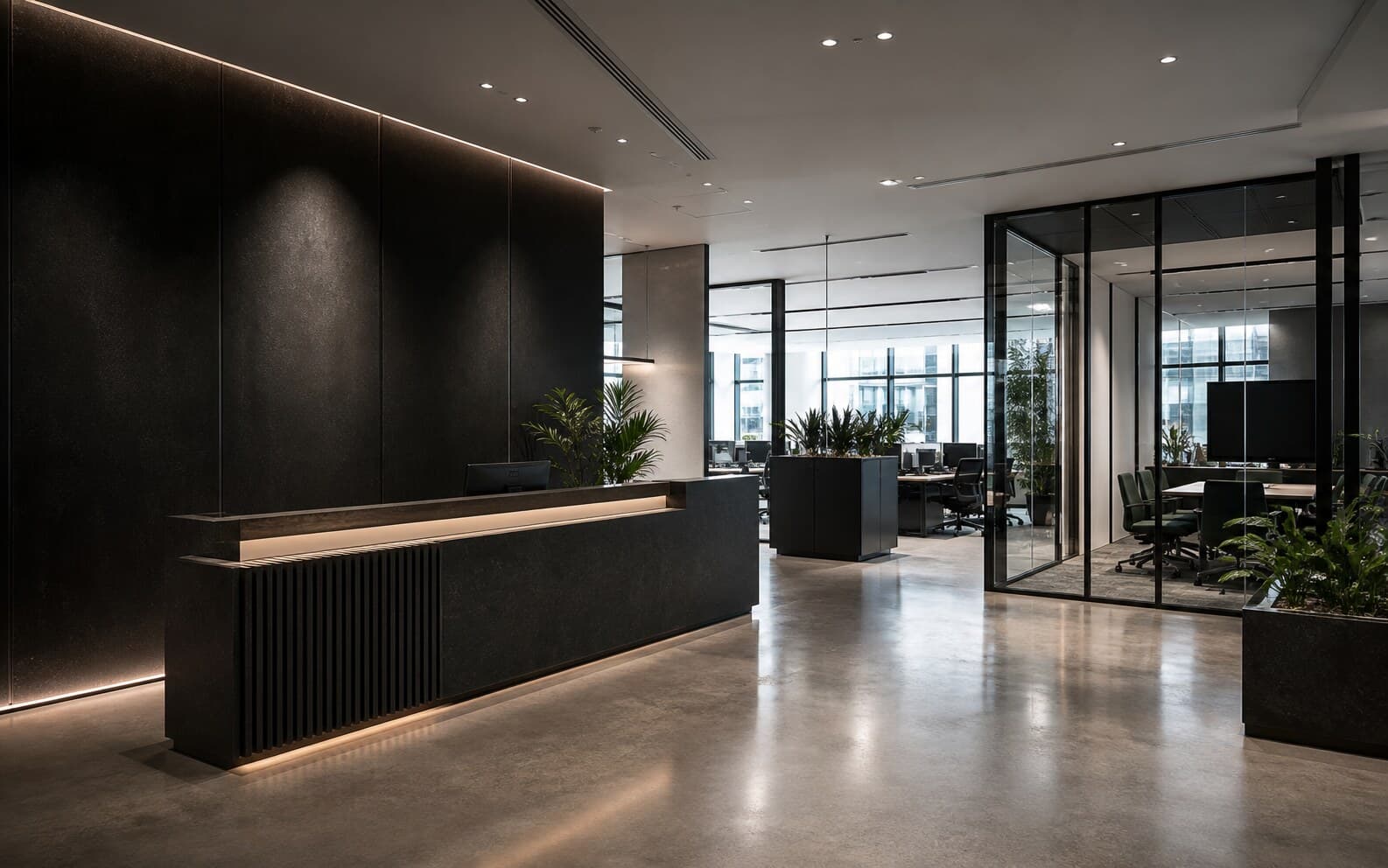
What are the steps in a commercial fitout?
A commercial fitout in Sydney runs through six main stages: the initial enquiry and brief, a site review and what's being built, design and finishes, approvals and landlord sign-off, the build itself, and finally handover and the defects period. Each stage feeds the next, so the clearer your early decisions are, the smoother the build and handover tend to be.
The stages overlap rather than run one strictly after another. We often get approvals moving and order long lead-time items while the design is still being finalised. Below is how we work through each stage, so you know what to expect, what we'll ask of you, and where the timing usually sits.
- Initial enquiry and brief — what the space needs to do
- Site review — the tenancy condition and the base building
- Design and finishes — turning the brief into a buildable plan
- Approvals and landlord sign-off — getting the works signed off
- Build — running the trades on site in the right order
- Handover and defects — completion, walkthrough, and the defects period
Initial enquiry and brief
Everything starts with understanding what the space has to do for your business. In that first conversation we work through how you'll use the tenancy, who works in it and who visits, the operational must-haves, and the dates you're aiming at — a lease start, an opening, or a handover deadline.
The more you bring to this stage, the better. A clear brief lets us pin down what's realistic early on rather than guessing around unknowns, and that keeps the later stages from drifting.
- The site address and any tenancy plans or floor area you have
- How the business will use the space, and any equipment or operational needs
- Lease requirements, including any fitout guidelines or make good obligations
- Target start, opening, or handover dates
- Photos of the current condition if you can get access
Site review and what's being built
Before we lock in any design, we go and look at the tenancy. A site visit tells us what we're actually working with — whether it's a bare base-building shell, a previous fitout to strip out, or a refurbishment of an existing layout — and where the existing services sit.
This is where the real picture of the works takes shape. The condition of the tenancy and the services behind the walls and ceilings usually matter more to the job ahead than the finishes do, so we sort them out early. That stops you committing to ideas that look good on paper but are hard to build in the actual space.
- Tenancy condition — shell, an existing fitout to remove, or a refurbishment
- Base-building services — mechanical, electrical, hydraulic, fire, and data
- Structural and access constraints that affect what can be built
- Any make good or reinstatement obligations carried from the lease
- Access, hours, and rules set by the landlord or centre
Design and finishes
With the brief and site review in hand, the design turns what you need into a buildable plan — the layout, partitions, joinery, services, lighting, and the finishes that set the look and feel of the space. We're after a plan that works for how the business runs day to day, not just how it looks on a drawing.
We make the finish and joinery selections at this stage because some items carry long lead times. Confirming them now, rather than once trades are already on site, keeps the program from stalling while you wait on materials or custom joinery.
- Layout, partitions, and how people move through the space
- Joinery and built-in elements such as reception, counters, and storage
- Services planning — power, data, lighting, air conditioning, and any wet areas
- Finish selections, with long lead-time items confirmed early
- A resolved plan that can be priced as real work rather than assumptions
Approvals and landlord sign-off
Most commercial fitouts need sign-off before work can begin, and which approvals apply depends on the works and the type of space. They commonly cover building approval, fire safety, accessibility, and services, and for hospitality venues, food-safety and licensing as well. We get the relevant approvals and certifications in place so the build starts on a sound footing rather than being paused or reworked later.
Alongside the statutory side, tenancies usually carry their own conditions. Landlords and shopping centres typically want fitout approval against their guidelines, and may set bonds, insurance requirements, inductions, and access or after-hours rules. We handle both tracks so they move together rather than holding each other up.
- Building approval and certification appropriate to the works
- Fire safety, accessibility, and services requirements
- Food-safety and licensing categories where hospitality is involved
- Landlord or centre fitout approval against tenancy guidelines
- Bonds, insurances, inductions, and access conditions
Build and running the trades on site
Once approvals are in place, the build runs to a set order, and that order matters. Demolition or strip-out comes first, then the rough-in of services, then partitions and ceilings, then joinery, and finally the finishes and the fine detail. We run the trades so each one is ready the moment the trade before it finishes — that's what keeps a fitout moving.
Throughout the build we keep you across progress and flag anything that needs a decision from you. Where the tenancy stays open, or sits inside a trading centre, we stage the works around access windows, noise controls, and the building's rules so we keep disruption manageable.
- Demolition or strip-out, and any make good of the existing space
- Services rough-in before walls and ceilings close up
- Partitions, ceilings, and joinery installation
- Finishes, fixtures, and final detailing
- Staging around trading, access windows, and building rules where needed
Handover and defects
As the build wraps up, we walk the space with you and check the work against what was agreed — the plan and the finishes. Anything you raise at that walkthrough goes on a list and gets resolved, and we pull together the relevant certifications and documentation so the space is ready to occupy or open.
Handover isn't quite the end. A defects period follows, and during it we fix anything that turns up in normal use. That gives you confidence the fitout performs the way it should once your business is actually running in the space.
- A handover walkthrough against what was agreed for the works and finishes
- A defects list, with items resolved before sign-off
- Certifications and documentation handed over
- Keys, manuals, and warranty information where applicable
- A defects period to address anything that arises in normal use